The Pre-Production Kick-Off Meeting: What to Cover Before the Camera Rolls
The kick-off meeting is the single most important meeting in any video production project. It’s where your team, your stakeholders, and your production partner align on what the video needs to achieve, how it will be made, who is responsible for what, and when everything needs to happen.
Most production problems don’t start on set. They start in the gap between briefing and filming, when assumptions go unchecked and details get left to ‘we’ll figure it out later.’ A structured kick-off meeting closes that gap.
This guide covers what the meeting should include, who needs to be there, and what you should walk away with. If you’re still in the process of choosing a production partner or writing your brief, start with our guide to the business of video production in Singapore.
Table of Contents
- Why Does the Kick-Off Meeting Matter So Much?
- What Should the Kick-Off Meeting Cover?
- How Do You Set Up the Production Timeline and Milestones?
- What Should You Walk Away With?
- Start Your Next Project Right
Why Does the Kick-Off Meeting Matter So Much?
A good kick-off meeting saves time and money on every stage that follows. It replaces scattered email threads and vague assumptions with clear, shared decisions that everyone can reference throughout the project.
What goes wrong when you skip it?
When teams jump straight from brief to production without a proper kick-off, three things typically happen.
First, creative misalignment. The production company interprets the brief one way. The client had something different in mind. This only surfaces at the rough cut, when fixing it means re-editing or reshooting.
Second, scope confusion. Nobody confirmed exactly how many deliverables are included, what formats they’ll be delivered in, or how many revision rounds are covered. These become friction points later when the invoice arrives. We’ve broken down how to avoid this in our guide to understanding your video production scope.
Third, unclear ownership. Nobody agreed on who approves the script, who gives feedback on the edit, or who has final sign-off. When multiple people send conflicting notes, the project stalls.
All three problems are preventable with one well-run meeting.
Who should be in the room?
Keep it tight. Every person in the meeting should have a clear reason to be there.
From the client side, you need the project lead who will manage day-to-day communication, and the final decision-maker who can approve creative direction and sign off on deliverables. If those are the same person, even better. Having too many stakeholders in the kick-off leads to competing opinions that slow everything down.
From the production side, you need the producer who will manage the project timeline and logistics, and the director or creative lead who will shape the concept and visual approach.
If your project involves an agency or third-party creative team, include them too. The kick-off is where everyone hears the same information at the same time. That prevents the telephone game where details get lost between handoffs.

What Should the Kick-Off Meeting Cover?
The meeting should move through three areas in order: objectives and audience, deliverables and scope, and creative direction. Covering them in this sequence means creative decisions are grounded in strategy, not the other way around.
How do you align on objectives and audience?
Start with why the video exists. This sounds obvious, but it’s where most misalignment begins. ‘We need a brand video’ is not an objective. ‘We need a 60-second video that introduces our service to marketing managers evaluating production partners’ is.
Get specific on the audience. Who is watching? Where will they see it? What should they do after watching? If the production team understands the viewer’s mindset, they’ll make sharper creative decisions throughout the project.
If you’ve already written a brief, the kick-off is where you walk through it together. Your production partner should be asking questions, pushing back on anything unclear, and confirming they understand the intent behind each point. If they don’t challenge anything in the brief, they’re either not reading it carefully or not thinking critically about it. Our guide to writing a video production brief covers what a strong brief should include.
How do you confirm deliverables and scope?
Once objectives are clear, confirm exactly what will be delivered. This is where the kick-off becomes a contract-level conversation.
Walk through the scope line by line: how many final videos, what lengths, what aspect ratios, what platforms they’re built for. Confirm whether subtitles, motion graphics, or additional format versions are included or billed separately.
Also confirm what’s not included. Talent fees, music licensing, drone footage, location permits: these are the items that generate surprise costs when they weren’t discussed upfront. A production partner who raises these proactively is saving you money, not adding complexity.
This is the moment to agree on the number of revision rounds. Two to three rounds is standard for most projects. Define what counts as a revision versus new scope so there’s no ambiguity when feedback starts flowing.
How do you agree on creative direction?
With objectives locked and scope confirmed, the conversation can move to creative approach. This is where the production team presents their initial thinking: the concept, tone, visual references, and any early ideas about locations, talent, or narrative structure.
The goal isn’t to approve a finished concept in the kick-off. It’s to confirm that the production team’s creative instincts are heading in the right direction. Share reference videos, mood boards, or examples of work you admire. Be specific about what you like and why: ‘I like the pacing of this video’ is more useful than ‘I want something premium.’
This is also where brand storytelling alignment happens. If the video needs to reinforce a specific brand narrative or visual identity, say so now. The further into the process you get before raising it, the more expensive it becomes to course-correct.
How Do You Set Up the Production Timeline and Milestones?
A timeline without milestones is just a deadline. The kick-off should establish not just when the final video is due, but what happens at each stage between now and delivery.
What are the key checkpoints between kick-off and delivery?
A standard video production project in Singapore runs through five checkpoints after the kick-off:
Script or treatment approval. The production team develops the concept into a written treatment or script. You review it, provide one round of consolidated feedback, and approve. This is the last point where major narrative changes are easy and cheap.
Pre-production confirmation. Locations, talent, crew, equipment, and logistics are locked. A call sheet is issued. This is your signal that the shoot is ready to go.
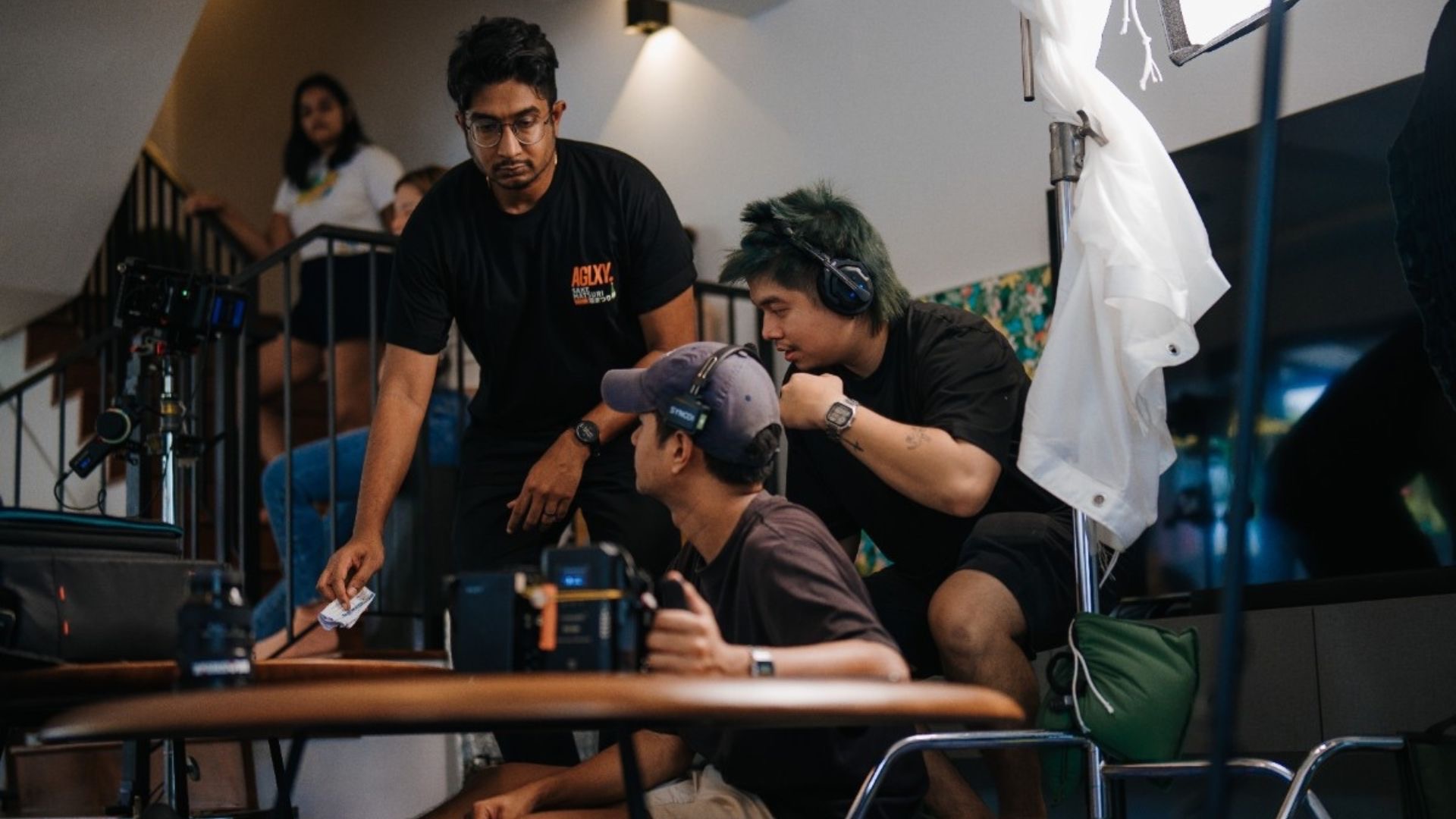
Shoot day. The production phase. If pre-production was thorough, this runs smoothly. If it wasn’t, this is where problems surface.
Rough cut review. The editor delivers a first assembly. You review structure, pacing, and story. This is the stage for big-picture feedback, not fine details.
Fine cut and final delivery. Detailed feedback on graphics, colour, sound, and text. After approval, the production team delivers final files in the agreed formats.
For a fuller breakdown of what each phase involves, see our complete guide to video production in Singapore.
How do you define the feedback and approval process?
Agree on the feedback workflow before the first deliverable arrives. This prevents the most common post-production bottleneck: scattered, conflicting notes from multiple reviewers submitted over days or weeks.
The most efficient approach: one person on the client side collects all internal feedback, consolidates it into a single document or time-stamped review (using tools like Frame.io), and submits it as one package per round. The editor works through one set of clear notes instead of piecing together feedback from five different email threads.
Also agree on response windows. If the production team delivers a rough cut, how many business days does your team have to respond? Without a defined window, reviews drift and the timeline slips. Three to five business days per round is standard for most corporate projects.
What Should You Walk Away With?
A kick-off meeting is only as good as what comes after it. If the decisions made in the room aren’t documented, they’ll be forgotten or disputed later.
What documents should exist after the kick-off?
Within a few days of the kick-off, your production partner should provide:
A confirmed scope document or updated proposal that reflects everything discussed: deliverables, formats, revision rounds, exclusions, and any changes from the original quote.
A production timeline with dates for each milestone: treatment delivery, pre-production lock, shoot day, rough cut, fine cut, and final delivery.
A contact and approval map that confirms who gives feedback, who approves, and who has final sign-off on each stage.
If your production partner doesn’t provide these unprompted, ask for them. These documents become the project’s backbone. Every decision, revision, and approval traces back to what was agreed in the kick-off.
How do you keep momentum after the meeting?
The biggest risk after a successful kick-off is losing momentum. The meeting ends on a high note, then the project sits for two weeks while everyone goes back to their day jobs.
Set a clear next step before the meeting ends. Usually that’s the production team delivering a treatment or creative concept by a specific date. If both sides know what’s due and when, the project stays in motion.
A short weekly check-in (even 15 minutes) during pre-production keeps things on track without adding overhead. It’s far more efficient than waiting until something goes wrong and then scrambling to fix it.
Start Your Next Project Right
The kick-off meeting is your best opportunity to prevent problems before they start. When objectives, scope, creative direction, timelines, and approval workflows are aligned in one conversation, every stage that follows runs smoother.
If you’re planning a video project in Singapore and want a production partner who takes the kick-off as seriously as the shoot itself, get in touch with Epitome Collective. We’ll help you set the project up for success from the very first meeting.

.png)