Globalising a brand without losing its identity: The Sambu Kara story
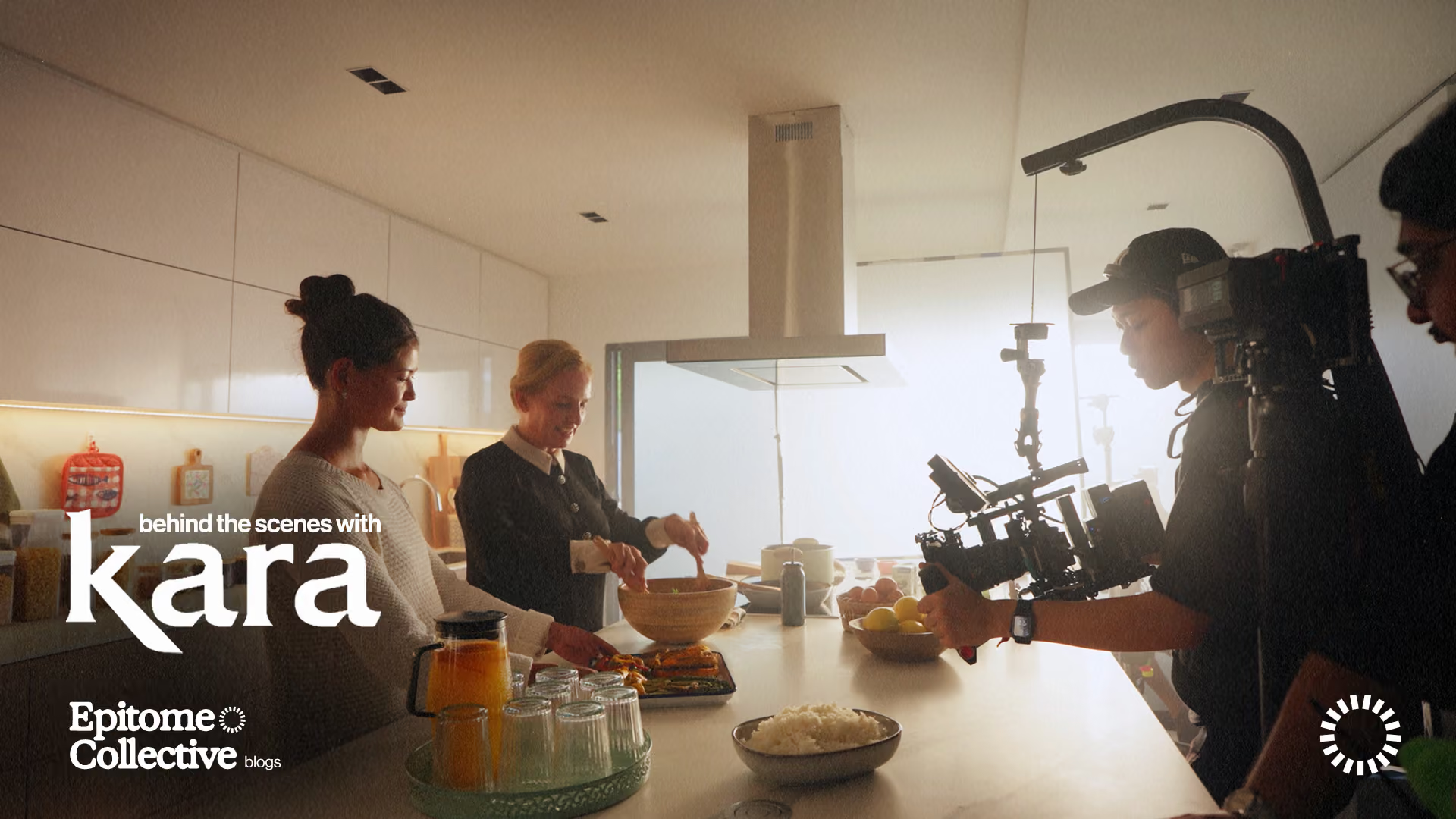
Picture this: Your product works beautifully in one market. Then you need to introduce it somewhere completely different.
Different cooking habits. Different visual expectations. Different cultural context. And here’s the real challenge: you need to feel native to this new audience without becoming unrecognizable to everyone who already loves you.
Table of Contents
- The Client Brief
- Our Creative Treatment
- Production Process
- The Outcome
- Takeaways for Brand and Product Teams
- Planning Your Next Film or Activation
The Client Brief
Sambu Group came to Epitome Collective with a specific challenge: they needed a video for their trade show in Germany, a crucial moment to introduce their Southeast Asian coconut products to European distributors, retailers, and chefs, the same high-stakes brief we bring to TV commercial production.
The film had to work in that high-stakes trade environment while feeling authentic to audiences who’d never encountered the brand before. It needed to speak to both home cooks and professional chefs, show versatility across different SKUs, and make a tropical product feel native to European kitchens, all without erasing the brand’s Southeast Asian identity.
Our Creative Treatment
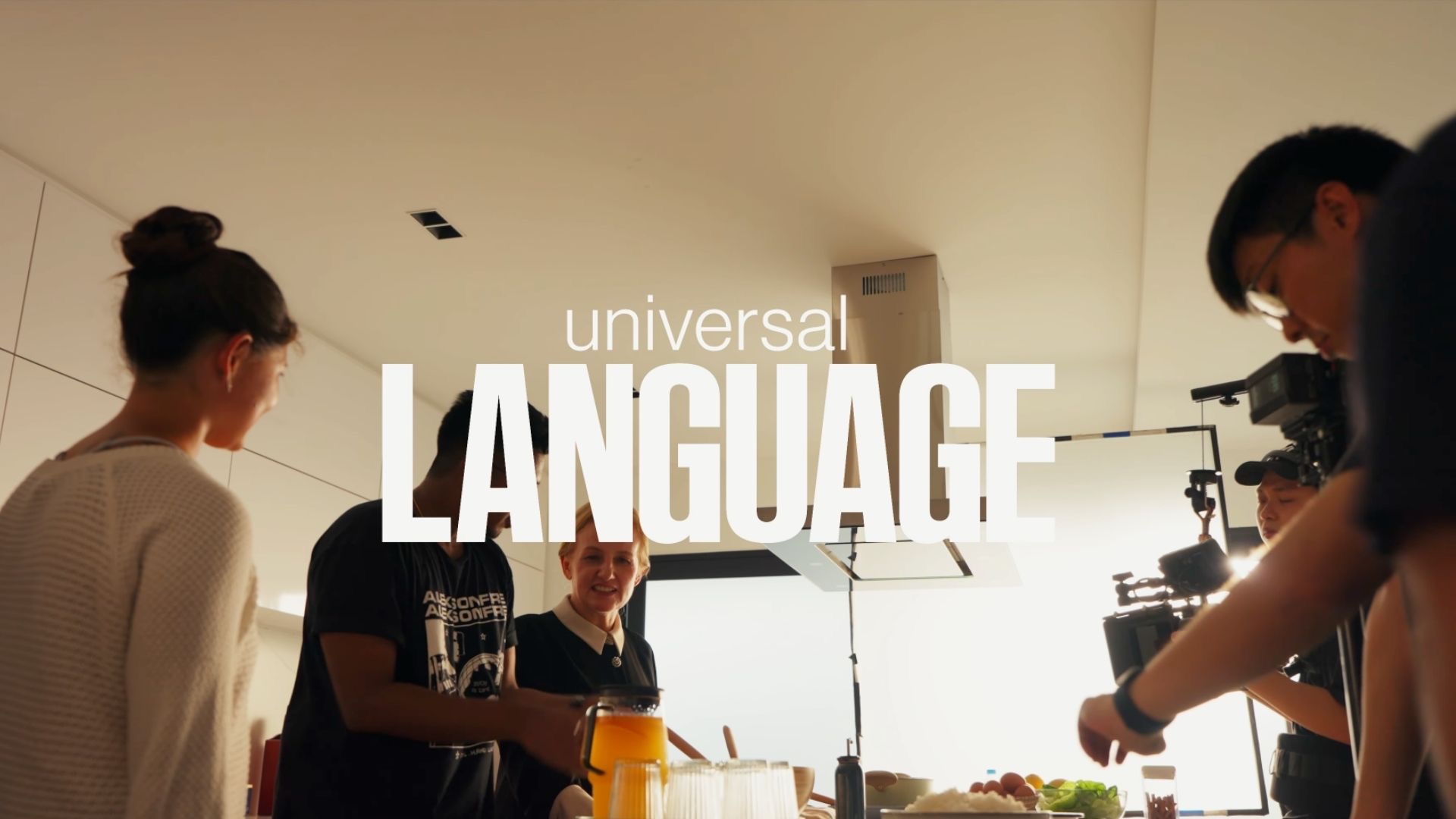
Instead of centering Kara’s story on tropical origins (the expected palms and beaches that tell European consumers "this isn’t for you"), we anchored everything on something universal: what it feels like to share food, the kind of brand storytelling approach that travels across markets.
Our creative direction rested on three pillars:
Warmth. Real interactions in believable spaces, not staged lifestyle fantasies.
Flavour. Textures, steam, and small movements that make dishes genuinely craveable on screen.
Versatility. Kara as the quiet constant across different cooking contexts.
To express this, we designed one narrative that flows seamlessly between two worlds: a home kitchen where Kara lives in everyday cooking, and a restaurant kitchen where it supports plated dishes in service. The film would move between these spaces through match cuts (same actions, different scales) showing the product belongs in both without a single line of voiceover.
For localisation, we’d cast Western talent and use contemporary European wardrobe, but keep Kara’s tropical heritage visible where it matters: in the food itself. Warm, vibrant dishes that nod to Southeast Asian flavours while remaining approachable for European cooking.
Finally, we designed three signature camera techniques (transparent surface mount, under-table perspective, and product tracking rig) that would become reusable visual anchors for future Kara content.
Production Process
Setting Up Two Fully Functioning Kitchens
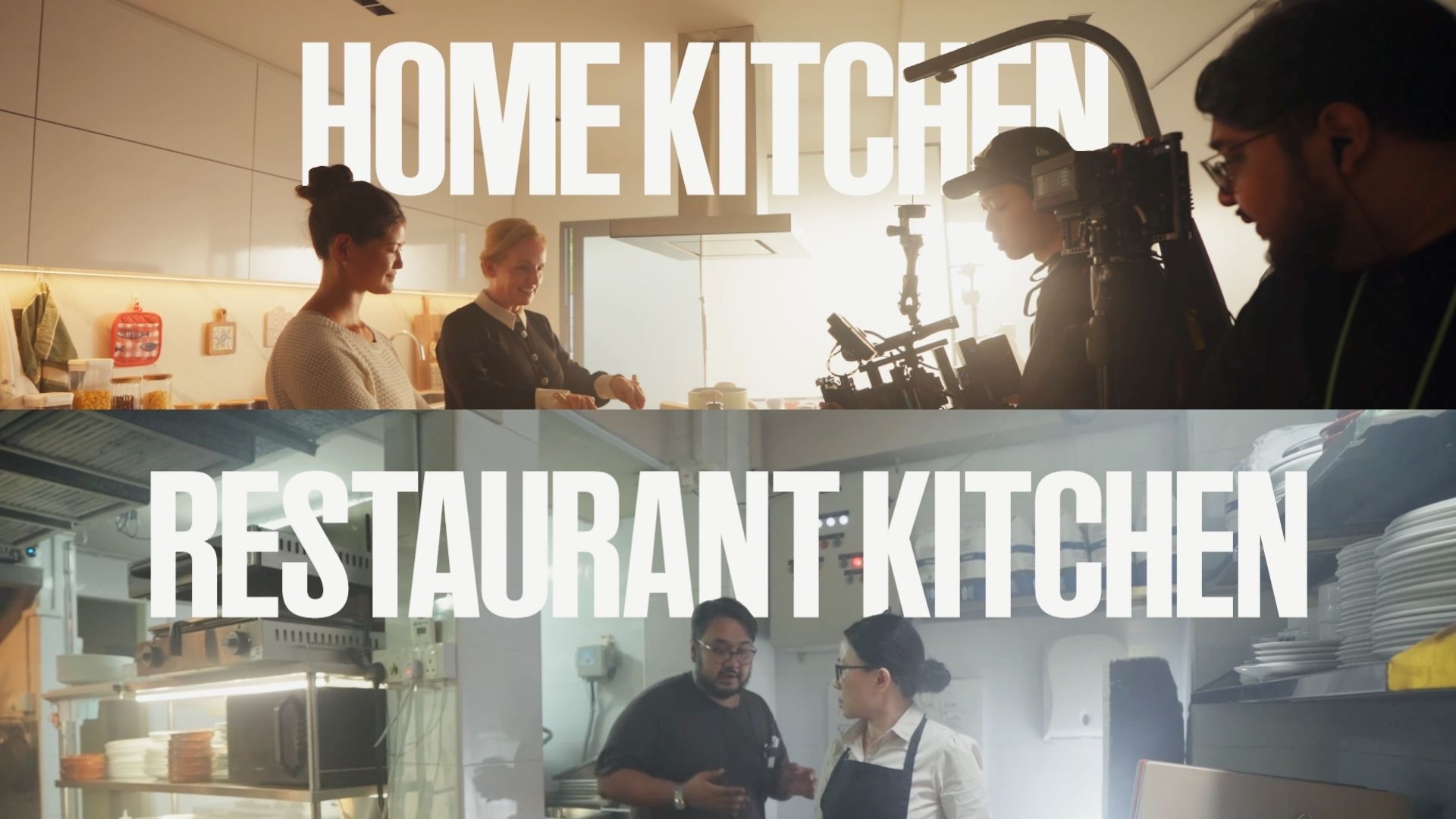
We set up two complete kitchen environments: a domestic kitchen and a restaurant kitchen. Every element was designed to feel authentic to European environments while providing the technical flexibility we needed.
Each kitchen was mapped in advance. We knew exactly where every pot, plate, and pack would be positioned, and which actions in the home kitchen would mirror actions in the restaurant. This pre-planning meant we could move efficiently on shoot days while maintaining creative precision.
Casting and Wardrobe
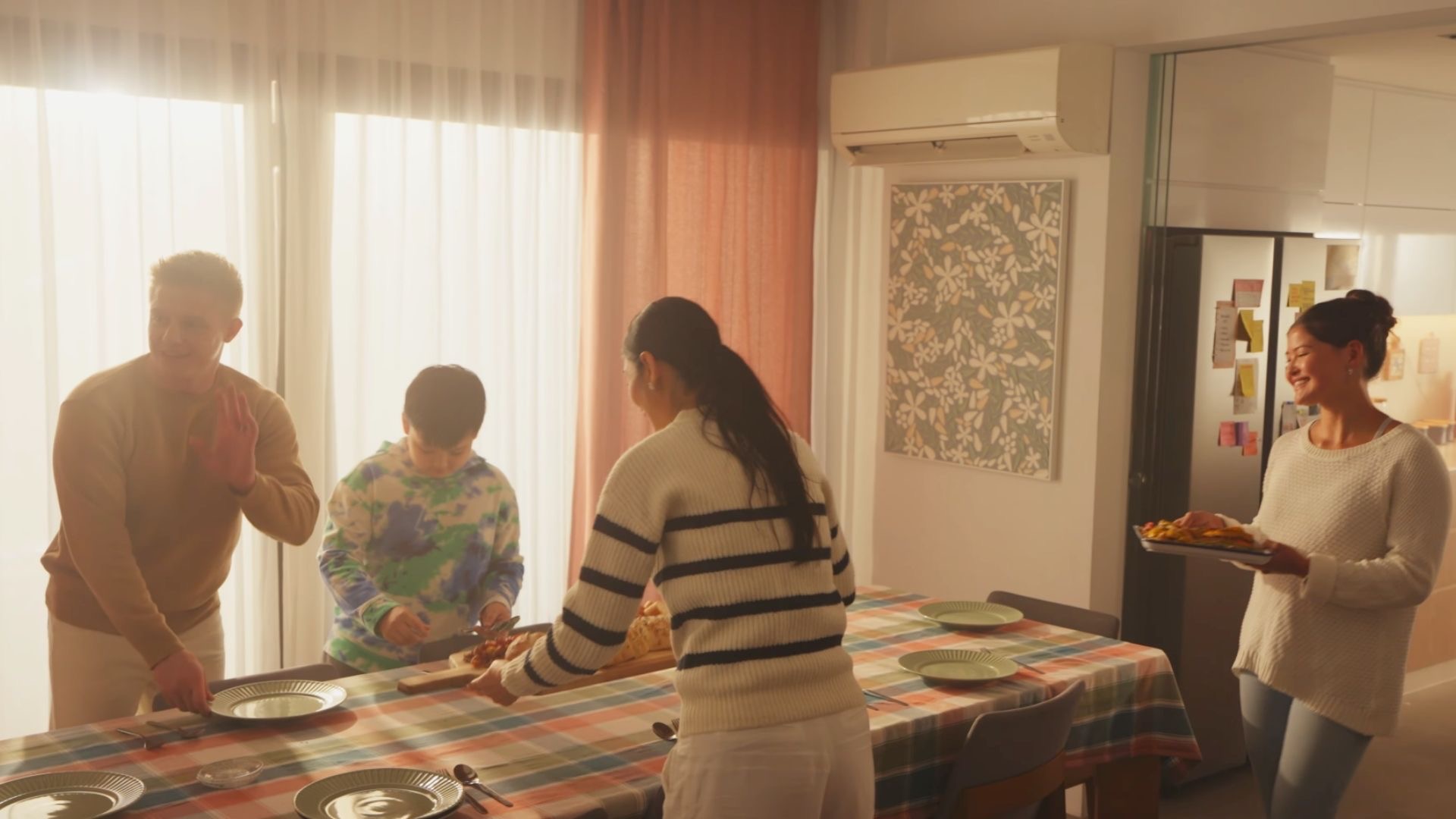
We cast Western talent whose presence would feel natural to European audiences, people who could move comfortably in both domestic and professional kitchen environments. Wardrobe stayed intentionally understated: clean, neutral tones and practical clothing that blended into the spaces.
Capturing Real Interactions
Rather than directing overly scripted performances, we focused on capturing natural, believable moments. In the home kitchen, we filmed a multi-generational family: a grandmother cooking, her son and grandson entering the kitchen, and the whole family gathered around the table. In the restaurant kitchen, we captured kitchen staff at work, then guests enjoying their dishes. This approach kept the film grounded in reality rather than slipping into glossy commercial territory.
Food Development
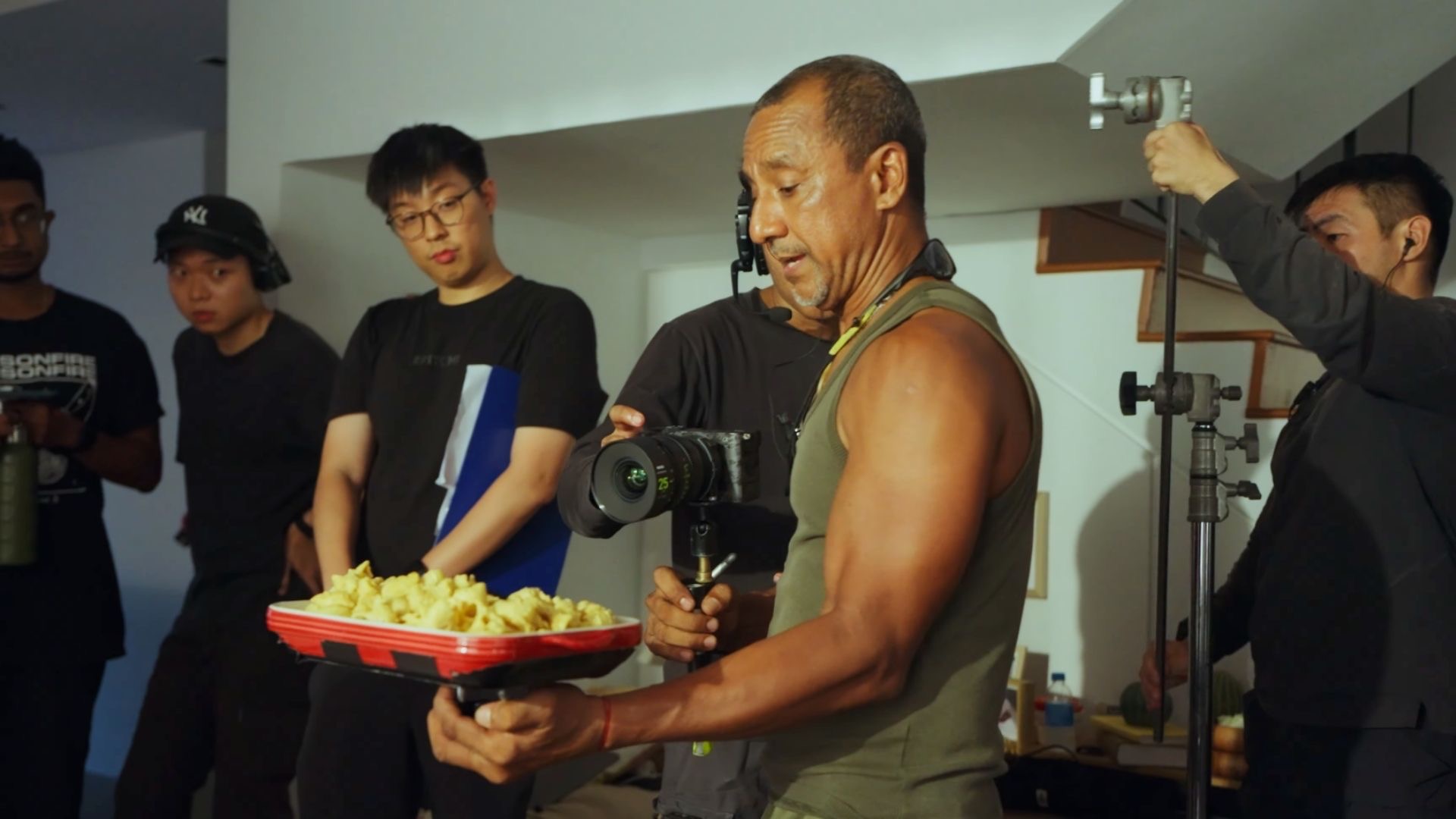
Every dish was developed with two criteria: would someone realistically cook this, and does it look good on camera? We avoided food sculptures. Dishes were plated as they would be at home or in a restaurant, selected to show Kara at work through creamy sauces, glossy surfaces, and textural contrasts. Recipes carried warm, vibrant tones that nodded to tropical flavours while remaining approachable.
Lighting, Lensing, and the Three Signature Shots
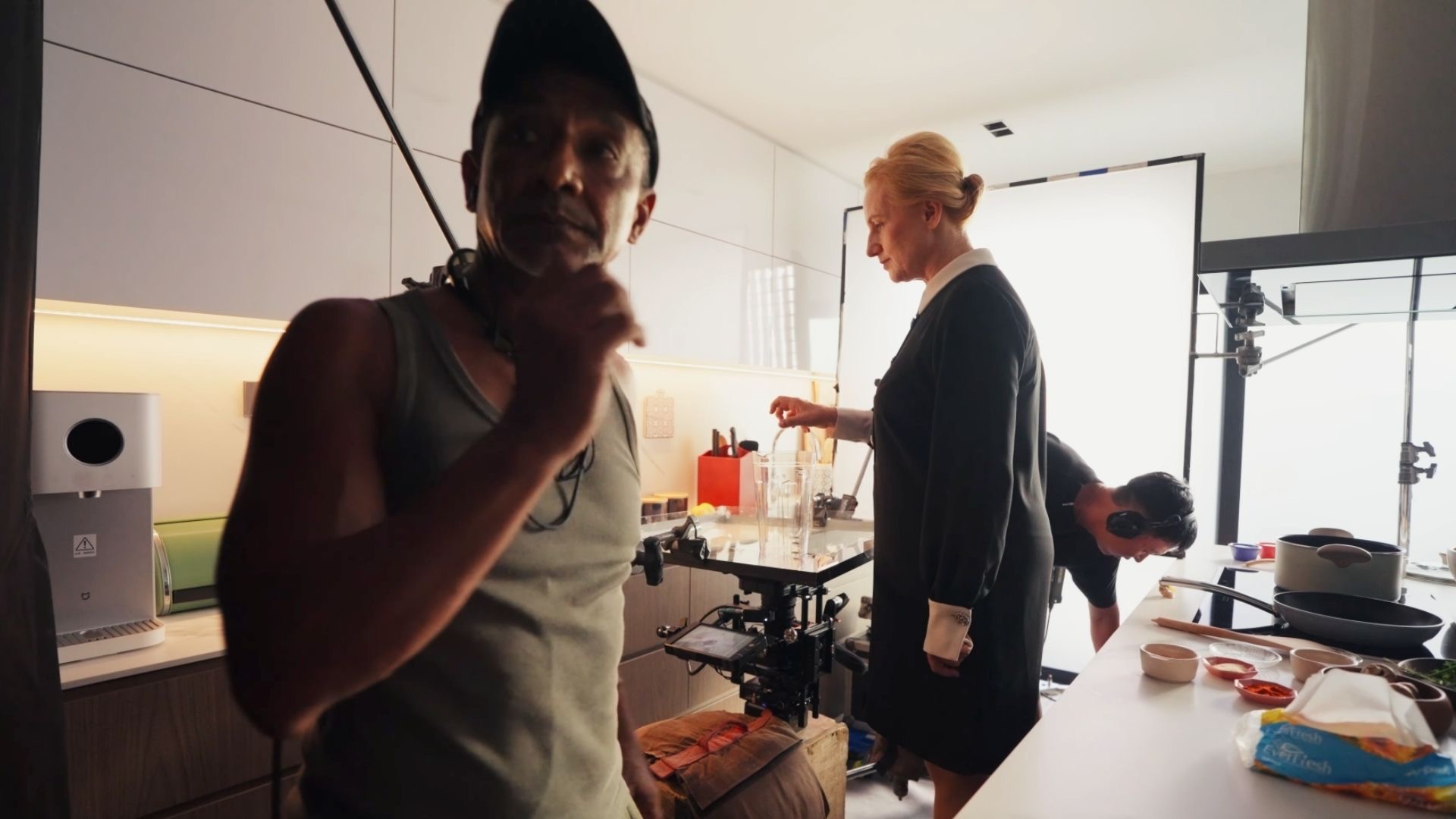
Lighting was tuned to protect colour and reveal movement: steam, bubbles, the surface of a dish. We framed key moments around familiar gestures like setting a dish down, the first spoon breaking a sauce, or serving another person.
Each of the three hero shots was executed as a self-contained technical challenge:
Transparent Surface Mount. We rigged the camera beneath a clear surface and choreographed the exact moment when the cook’s hands would add ingredients from above, then match cut to the restaurant kitchen where another chef would be stirring. Same motion, different scale.
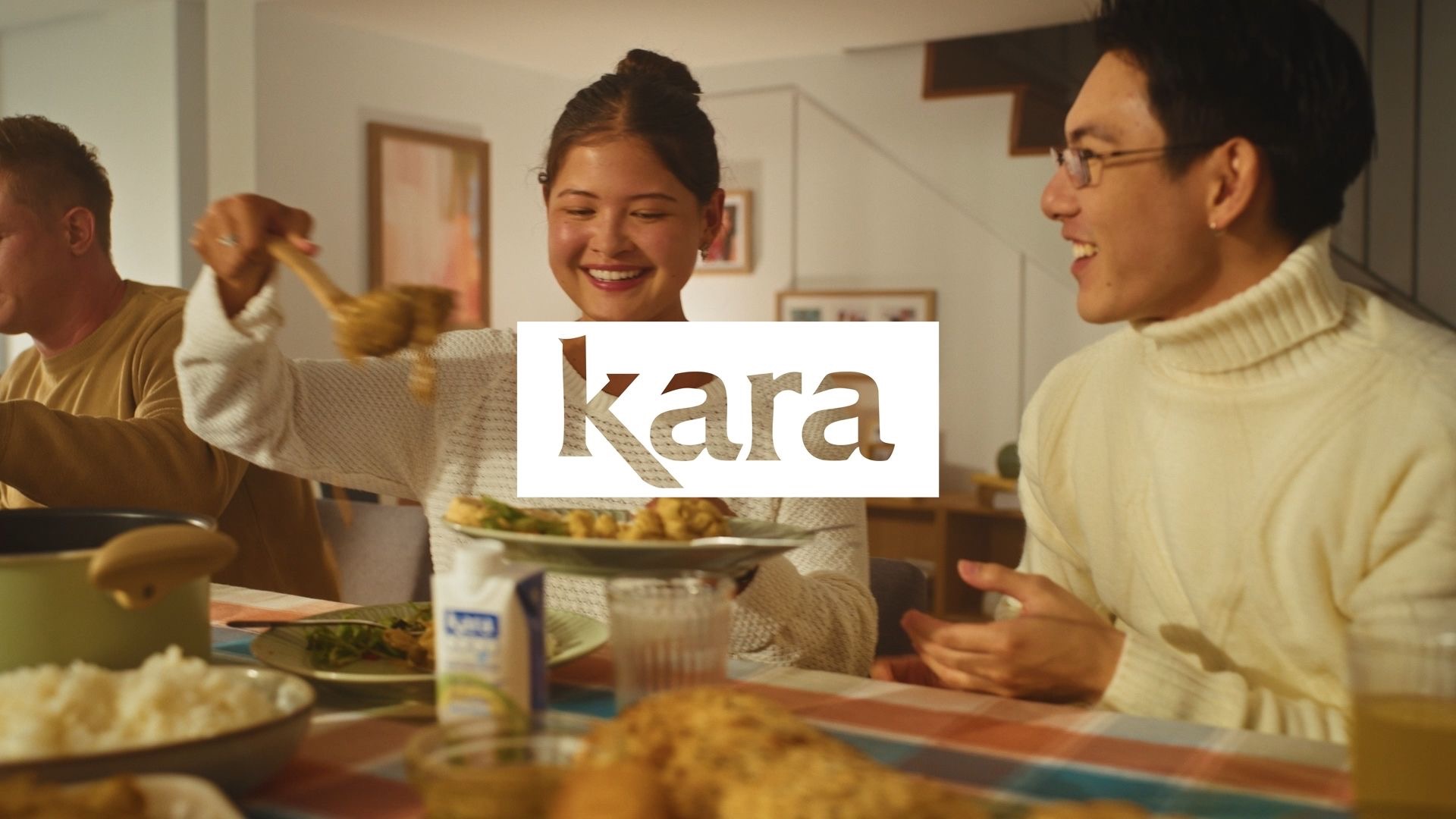
Under-Table Perspective. We mounted the camera underneath a glass dining table and captured multiple takes of dishes being shared, focusing on natural movement without over-directing performances.
Product Tracking Rig. We placed a platform in front of the lens with the product positioned on it, allowing us to capture a hand reaching in to pick up the product from a shelf or table while the camera follows the movement seamlessly. This created a dynamic, first-person perspective that shows the product being actively chosen and used.
The Outcome
Kara walked away with a master film that successfully introduced their brand to European trade audiences at the Germany show, speaking to both retail buyers and foodservice distributors without feeling split between two messages. You can see the Sambu Kara campaign in our portfolio.
Beyond the master film, they received a complete content system: multiple cut-down versions for different platforms, loops for in-store screens and social media, high-resolution stills for sales decks, and modular sequences that can be re-edited for future product launches.
The three signature camera techniques became ownable visual assets that now appear across Kara’s digital content, providing reusable visual language for future campaigns.
Most importantly, the film made a Southeast Asian brand feel at home in European kitchens without erasing its roots. European audiences saw themselves in the casting and environments, while the tropical heritage remained visible where it mattered: in the food itself.
Takeaways for Brand and Product Teams
A few principles from this project:
Localize through people and spaces, not just language. Let casting, wardrobe, and environment reflect the market you’re speaking to. Keep your origin visible in the product and on the plate.
Structure your story around real use occasions. Home, restaurant, on the go, in store. Build your narrative around where the product actually shows up, not abstract claims.
Invest in a handful of ownable visual ideas. Signature shots become visual shorthand for your brand. They travel across campaigns and channels, creating consistency without repetition.
Planning Your Next Film or Activation
Whether you’re introducing a regional favourite to new markets, refreshing a core range, or creating content for a major exhibition, the right film can do more than fill a screen.
At Epitome Collective, we combine category understanding with production craft to build pieces grounded in real kitchens, real plates, and real use cases.
If you have a brief and want to see how this approach could look for your brand, share it with us. We’ll help you turn it into a clear, visual story that people can actually imagine in their own kitchens.
Contact us