Interview Video Production: What Every Singapore Brand Should Know
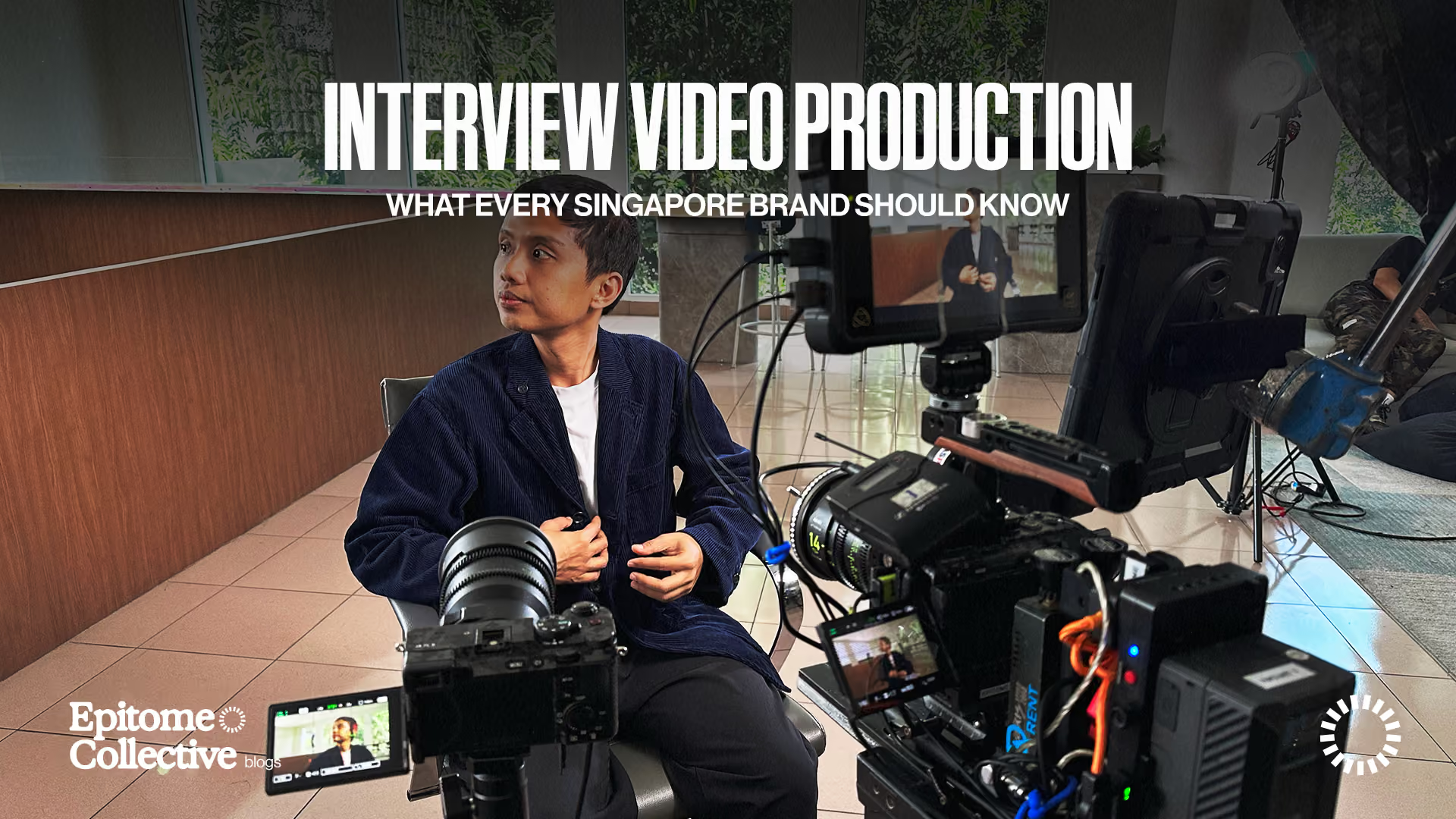
Interview videos are one of the most versatile tools in a brand's content arsenal. Testimonials, thought leadership pieces, internal communications, case studies, recruitment stories, they all rely on the same core format: a real person speaking directly to camera or to an interviewer.
For Singapore brands investing in video production, interviews offer something scripted content cannot: authenticity. Audiences connect with real voices sharing real experiences. That trust translates into engagement, credibility, and conversions.
But a poorly filmed interview can do more harm than good. Bad audio, flat lighting, or an uncomfortable subject on camera undermines your message before a single word lands. The difference between amateur and professional interview video production comes down to preparation, equipment, technique, and post-production.
This guide covers everything Singapore brands need to know about producing interview videos that look and sound broadcast-ready, whether you are filming in-house or working with a production company.
Why Are Interview Videos So Effective for Brands?
Interview videos build trust faster than almost any other content format. A real person sharing their experience on camera creates an emotional connection that text, graphics, and even scripted video struggle to match. For Singapore brands competing in crowded digital spaces, that authenticity is a genuine differentiator.
What Types of Brand Content Use the Interview Format?
The interview format is more flexible than most marketers realise. Common applications include customer testimonials, where clients describe their experience in their own words. Executive thought leadership videos position company leaders as industry voices. Employee spotlight interviews support recruitment and employer branding. Case study videos walk through a project or result with the people who delivered it. Even FAQ-style content works well when a subject matter expert answers common questions on camera.
Why Do Audiences Trust Interview-Style Videos More Than Scripted Content?
Scripted videos are polished, but audiences know it. Interview videos feel unrehearsed because, to some degree, they are. The subject is responding in the moment, choosing their own words, and reacting naturally. Viewers pick up on these cues. Research consistently shows that user-generated and testimonial content outperforms branded messaging in perceived credibility. For brands investing in corporate video production in Singapore's competitive landscape, leveraging that trust gap is a strategic advantage.
How Should You Plan an Interview Video Shoot?
Great interview videos are built in pre-production, not on the day of filming. The planning stage determines whether your shoot runs smoothly or falls apart under pressure. For brands new to video production in Singapore, investing time upfront saves money, stress, and reshoots.
What Pre-Production Steps Matter Most for Interviews?
Start with a clear brief. Define the purpose of the interview: is it a customer testimonial, a leadership piece, or an internal training video? That purpose shapes everything from question design to location choice. Next, write your interview questions in advance. Structure them to guide the conversation from broad context into specific, quotable answers. Open-ended questions work best. Avoid anything that invites a simple yes or no.
Scout your filming location before shoot day. Check for background noise, natural light availability, and enough space for equipment. In Singapore, common interview locations include office meeting rooms, co-working spaces, outdoor urban settings, and dedicated studios. If you are unsure where to start, our video production guide for Singapore walks through location considerations in detail.
How Do You Prepare Your Interviewee to Feel Comfortable on Camera?
Most people are not natural on camera, and that is completely fine. Share the questions with your subject at least 24 hours before filming so they can gather their thoughts. On the day, spend 10 to 15 minutes in casual conversation before rolling. Let them know there are no wrong answers and that everything can be edited. A relaxed subject delivers better soundbites, more natural expressions, and a more engaging final video.
What Equipment and Setup Do You Need for a Professional Interview?
The right equipment turns a basic talking-head clip into a polished, broadcast-quality interview. You do not need a Hollywood budget, but cutting corners on lighting and audio will show in the final product. Here is what a professional interview setup in Singapore typically involves.
How Should You Set Up Lighting for an Interview?
Lighting shapes how your subject looks and feels on screen. The standard approach is a three-point lighting setup: a key light as the primary source, a fill light to soften shadows on the opposite side, and a back light to separate the subject from the background. For on-location filming in Singapore, natural light from large windows can serve as your key light, but you will need diffusion panels to control harsh tropical sunlight. Avoid overhead fluorescent lighting common in Singapore offices. It creates unflattering shadows under the eyes and washes out skin tones. Even a simple two-light kit dramatically improves the image.
What Audio Equipment Produces the Best Results?
Audio quality matters more than video quality in interviews. Viewers will tolerate a slightly imperfect image, but they will click away from bad sound within seconds. Use a lavalier (clip-on) microphone for each speaker to capture clean, consistent dialogue. A shotgun microphone on a boom just out of frame serves as an excellent backup. Always record a few seconds of room tone before starting the interview. This gives your editor clean ambient audio to work with during post-production. If you are filming in a Singapore office or co-working space, listen for air conditioning hum, traffic noise, and echo from hard surfaces. Soft furnishings, carpeted rooms, and acoustic panels make a noticeable difference.
What Are the Best Filming Techniques for Interview Videos?
Solid technique separates forgettable talking-head footage from compelling, watchable interview content. Once your equipment is in place, these filming decisions shape the visual quality and editorial flexibility of the final video.
How Many Cameras Should You Use for an Interview?
A single camera works for straightforward interviews, but a two-camera setup is the industry standard for professional corporate videography. Camera A typically captures a medium shot from the waist or chest up. Camera B frames a tighter close-up from the shoulders. Positioning both cameras on the same side of the subject, close together, maintains consistent eye direction. The tight shot gives your editor a natural cut point, which is essential for trimming pauses, stumbles, or lengthy answers without a visible jump cut.
What Framing and Composition Rules Apply to Interviews?
Use the rule of thirds. Place your subject's eyes along the upper third line, slightly off-centre in the frame. Leave 'looking room' on the side where their gaze is directed, which is towards the interviewer. Position the camera at the subject's nose level for the most natural, flattering angle. Shooting from too high makes the subject look small; too low can feel imposing. Pay attention to the background. A clean, uncluttered backdrop with some depth and visual interest, like a bookshelf, office space, or textured wall, adds production value without distracting from the speaker.
How Does Post-Production Improve Interview Videos?
Raw interview footage rarely works as a finished product. Post-production is where your editor transforms 30 or 60 minutes of conversation into a tight, compelling three-to-five-minute video. For a deeper look at this stage, see our complete post-production breakdown.
How Do Editors Create Pace and Story from Raw Interview Footage?
The editor's first job is to identify the strongest soundbites, the moments where the subject says something clear, specific, and emotionally resonant. From there, they build a narrative arc: a beginning that sets context, a middle that delivers the core message, and an ending that reinforces the takeaway. Cutting between camera angles keeps the visual rhythm moving and disguises any edits to the dialogue. Colour grading ensures a consistent, professional look across every shot.
When Should You Add B-Roll, Graphics, or Subtitles?
B-roll footage, the supplementary shots layered over the interview audio, adds visual variety and context. If the subject talks about a product, show the product. If they describe a team event, cut to footage of it. Graphics and lower-third titles introduce speakers and highlight key statistics or quotes. Subtitles are no longer optional. Most social media video is watched without sound, and subtitles boost accessibility and retention across every platform. A professional post-production team handles all of these elements to keep the final video polished and engaging.
Should You Hire a Video Production Company for Interviews?
Basic interview content can be filmed on a smartphone with decent natural light. But when the video represents your brand publicly, whether as a testimonial on your website, a case study for sales, or a thought leadership piece on LinkedIn, production quality directly affects credibility.
When Does It Make Sense to Bring in a Professional Production Team?
Consider hiring a production company when the interview will be seen by clients, investors, or a broad public audience. If the video needs to match your brand's visual identity, or if you need multiple polished deliverables from a single shoot, professional support pays for itself. A production team also handles logistics that brands often underestimate: location scouting, lighting setup and teardown, audio mixing, colour grading, and export in the correct formats for each platform.
What Should You Look for in a Singapore Production Partner?
Look for a video production company in Singapore with a portfolio that includes interview-driven content, not just flashy commercials or event highlight reels. Ask about their process: do they help with question scripting? Do they provide a director on set to guide the interviewee? What does their post-production workflow include? The best partners treat your interview shoot as a strategic content asset, not just a camera-pointing exercise. A good production house will also advise on how to repurpose the footage across multiple channels, maximising the return on a single shoot day.