Brand Identity in Advertising: Lessons From Gatsby's 2006 Ad
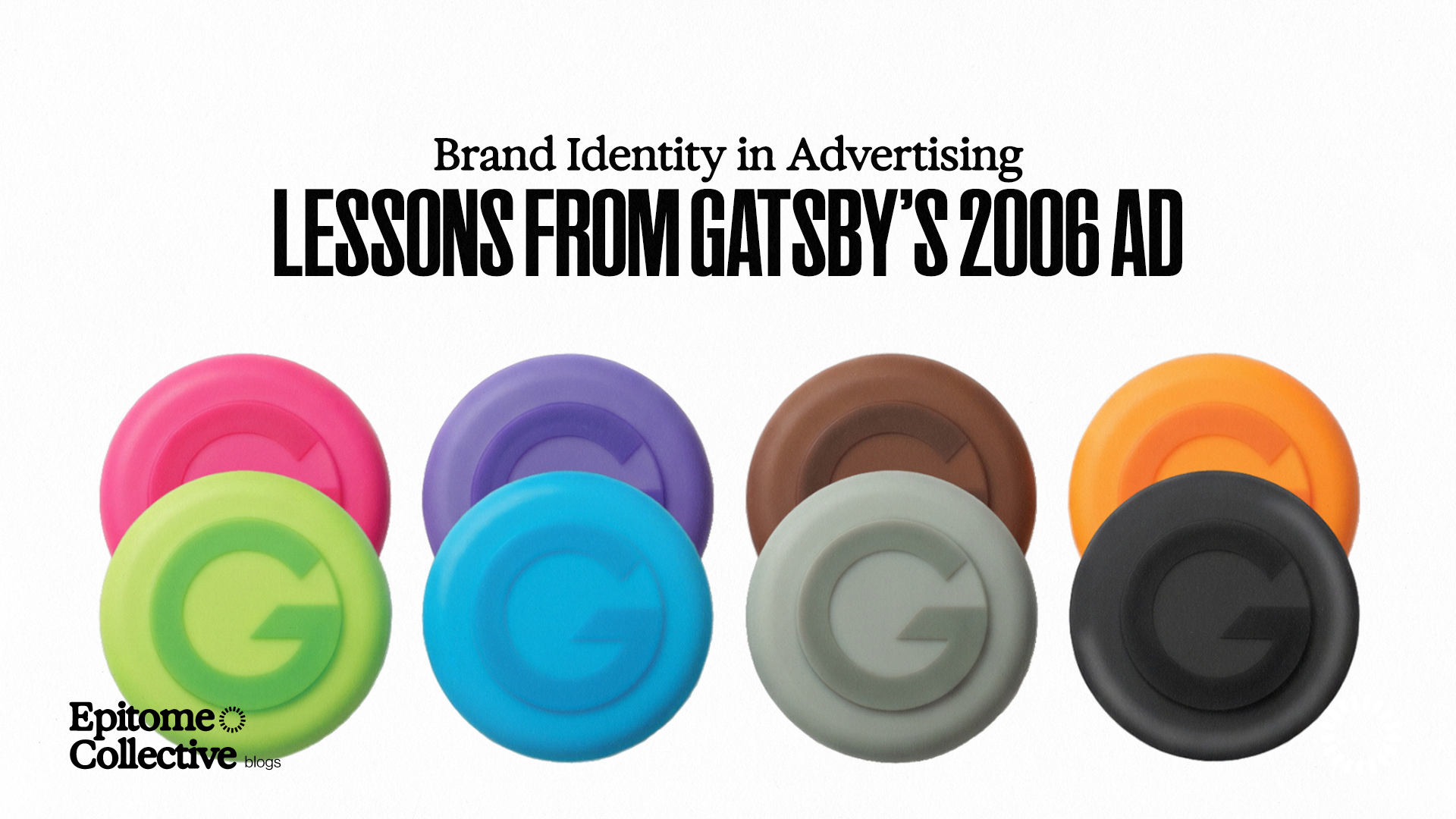
Brand identity in advertising is the set of cues, such as colour, people, sound and visual style, that let viewers recognise a brand before they see its logo. Gatsby's 2006 launch ad for Moving Rubber hair wax shows those cues working together.
Mandom, the company behind Gatsby, shipped 7.4 million units in the first ten weeks. By the end of September 2006, Gatsby's share of men's hair wax in Japan had risen from 33% to nearly 60% (by value, excluding convenience stores).
The ad rests on four choices any brand can study:
- Borrowed assets: a famous face, the culture of young men copying his hair, and a 1975 love song with the brand name sung into its hook
- Talent: Takuya Kimura, whose public image matched what a restylable wax promised
- Colour: six bright tubs set against an ad world of black, white and grey
- Visuals: wardrobe, framing and movement that keep attention on the hair
This breakdown from Epitome Collective, a video production company in Singapore, takes each choice in turn and ends with how to apply it to your own brand. For the wider principles behind it, read our guide to brand storytelling for Singapore brands and agencies.

What was Gatsby's Moving Rubber ad?
Gatsby's Moving Rubber ad was a three-spot TV campaign that Mandom aired in Japan from August 2006 to launch a restylable hair wax. It starred Takuya Kimura and was made by Dentsu Kansai with director Hideki Kuroda.
What problem was Gatsby solving in 2006?
Gatsby entered 2006 as Japan's best-selling men's hair wax, with a 33% share. Shiseido had relaunched its rival brand Uno in August 2005, and that pressure pushed Mandom into a full renewal of Gatsby.
The range itself had become a problem. Gatsby sold 22 waxes with near-identical names such as 'Ultra Hold', 'Ultimate Hold' and 'Ultra Hard'. Shoppers, and even store staff, struggled to tell them apart (Nikkei xTECH). Meanwhile the whole category was racing toward harder hold.
Mandom cut the range to 14 products and staked most of it on Moving Rubber, a wax that holds but can be reshaped through the day. Twelve of the 14 were Moving Rubber: six variants, each in two sizes.
What did the three spots show?
Mandom released the spots in stages around the product's on-sale date of 23 August 2006 (Mandom press release):
All three spots were shot in one day in July 2006 at a Yokohama studio, with no choreography planned. Kimura improvised to the music. In September 2006 the campaign ranked first out of 2,488 brands in CM Databank's likeability survey (Mandom).
Here's the ad:
How did Gatsby build the ad from assets people already knew?
Gatsby built the Moving Rubber ad from three things its audience already knew: Takuya Kimura's face, the culture of young men copying his hair, and a 1975 Stylistics song with 'Gatsby' sung into the hook. Because none of them was new, the ad began with recognition.
Borrowing a face young men already knew
Gatsby's target was high school and university guys. Kimura was already a star to them through SMAP, one of Asia's best-selling boy bands, and a run of hit TV dramas that earned him the nickname 'The King of Ratings'.
Mandom picked him as a fashion leader admired across ages and genders. He had also been Japan's most popular male commercial actor for eight years running. Gatsby borrowed attention Kimura had already earned with the people it wanted to reach.
Borrowing a culture already built around his hair
Kimura's influence reached his fans' own appearance. From 1994, Japanese men copied his clothes and hairstyles so widely that the press named it 'Kimutaku syndrome'.
That habit was in place long before Gatsby arrived. A hair wax ad starring Kimura plugged straight into it: viewers who already wanted his hair now had a product to shape it with.
Borrowing a 1975 love song
The jingle is an arrangement of The Stylistics' 'Can't Give You Anything (But My Love)', a UK number one in 1975. Composer Yoshiaki Kusaka arranged it, and Gary Adkins sang it. The hook was rewritten to 'I can give you Gatsby', which turns the most memorable line of the song into the brand name.
Here's the originalT he Stylistics' 'Can't Give You Anything (But My Love):
Mandom reported that the arranged song was among the things viewers talked about most. Research on music in advertising suggests why this works. One study found ads using pre-existing songs were recalled more often than ads with original jingles (90% against 78%). Original jingles did slightly better at getting the brand named (61% against 54%) (Comunicación y Hombre). By rewriting a known song around its name, Gatsby got the benefit of both.
How did Takuya Kimura represent Gatsby's brand identity?
Takuya Kimura represented Gatsby's brand identity because his public image matched the product's promise. Young Japanese men copied his look, so casting him linked a hair wax with the style its buyers already wanted.
Why fit mattered more than fame
In 1989, consumer researcher Grant McCracken described meaning transfer: people carry what a famous person stands for over to the product they appear with (McCracken, 1989). A brand borrows that person's meaning along with their attention. Later work by Michael Kamins (1990) added that the transfer is strongest when the person suits the product, especially for products about appearance.
Kimura fits that pattern closely. He was famous for exactly what the product changes: how a man's hair looks.
The casting also changed how he was shown. Kimura was best known in TV ads for comic roles. Gatsby presented him straight and cool instead, which gave the renewed brand a new tone while keeping his familiar face.
How the edit kept the brand in front of the star
Famous faces carry a risk. Researchers call it the vampire effect: viewers remember the celebrity and forget the brand (Erfgen, Zenker and Sattler, 2015).
The Gatsby spots guard against it in three ways:
- He never speaks, so nothing he says can pull attention away from the product.
- The song sings the brand. The one line viewers hear is 'I can give you Gatsby'.
- He leaves before the end, and the final frame shows only the six tubs and the logo.
The attention he drew landed on Gatsby. In September 2006 the campaign ranked first in unprompted ad recall for two weeks running, according to Mandom's report of the MC-CM Impact survey (Mandom).

How does colour carry the brand in the Gatsby ad?
Colour carries the brand in the Gatsby ad because the product supplies the only colour on screen. Kimura moves through a world of black, white and grey, while the six coloured Moving Rubber tubs appear only on the end card.
Six coloured tubs replaced silver and black
Before 2006, Gatsby wax came mostly in silver or black tubs. Moving Rubber launched in six round tubs, one colour per variant:
The change came from Mandom's own research, which found young men liked appealing, or fun-looking packaging (Diamond Online). The colours also solved the naming problem from the old range. A shopper could pick a tub by colour without decoding names like 'Ultra Hold'.
Why the ad world is black, white and grey
The spots strip colour out of everything except the product. Kimura wears a dark suit against a blank white background, so the frame stays monochrome for almost the whole ad.
The end card breaks that pattern. The six tubs sit in a clean grid above the Gatsby logo, and they are the first colour the viewer sees.
This builds what marketing scientists Byron Sharp and Jenni Romaniuk call a distinctive brand asset: a cue that brings the brand to mind without the logo (Distinctive BAT).
Why Mandom made shops stock all six colours together
The colour strategy only worked if shoppers saw all six tubs side by side, as they appear on the end card. Mandom treated the six variants as one product and pushed convenience stores to stock the full set.
To win the shelf space, it used one chain's sales data to show that men's wax would earn 2.6 times the baseline per unit of space. Every chain ended up stocking all six (Nikkei xTECH). The shelf then repeated the end card in every store.

Which visual choices made the product the subject?
The visual choices that made the product the subject are wardrobe, background, framing and movement. Each one keeps the frame controlled except for Kimura's hair, so the eye goes straight to what the wax does.
A sharp suit and skinny tie against loose hair
Stylist Tsuyoshi Noguchi dressed Kimura in a sharp suit and a skinny tie. Everything about him is buttoned up except his hair, which stays loose and messy.
A viewer reads the outfit as controlled and the hair as free, which matches the promise of a wax that holds but can be restyled.
A blank white background and tight, off-centre framing
The spots use a blank white background with no set. With nothing else in the space, the hair has no competition for attention.
Cinematographer Toru Kogure frames Kimura tight and off-centre. His head is often pushed to the edge of the frame or cropped, and he never settles in the middle. He seems to pass through the frame without ever stopping to pose. Low angles add a cool, looking-down presence.

Hands and movement as the product demo
Kimura keeps pushing and pulling at his own hair, so the restyling happens on camera. His hands work the way a buyer's hands would. In Rubber Sizzle, women's hands take over, messing up his hair and moulding his face like rubber.
Movement is allowed to blur, so the hair in motion stays the subject of the shot.
In Moving Sizzle, Kimura plays with his hair while facing the camera, then one quick brush of his fingers puts it straight back in place.

How can your brand apply these lessons?
Your brand can apply these lessons by deciding, before the shoot, which existing asset, person, colour and visual style will carry its identity. Gatsby made each of those decisions on purpose, and all of them point back to one product promise.
How to find assets your own audience already knows
Start by listing what your audience already pays attention to:
- A person they already follow, or a trend they already copy
- A song, sound or phrase they already know
- A format they already watch
- Your own past work they still remember
Pick one, then check whether your brand name or main message can sit inside it.
Twenty years on, Moving Rubber is still number one in its category in Japan, with over 40% of the men's wax market, according to Nikkei. If you're planning a campaign of your own, see how Singapore brands use video to tell their story.
Image credits
- Print ad and poster, 2006: Mandom Corporation
- Commercial stills: Gatsby Moving Rubber TV commercial, Mandom Corporation, 2006, via YouTube
- End card: Gatsby Moving Rubber TV commercial, Chinese-language version, Mandom Corporation