Liquid Death's Content Marketing: 4 Lessons for Brands
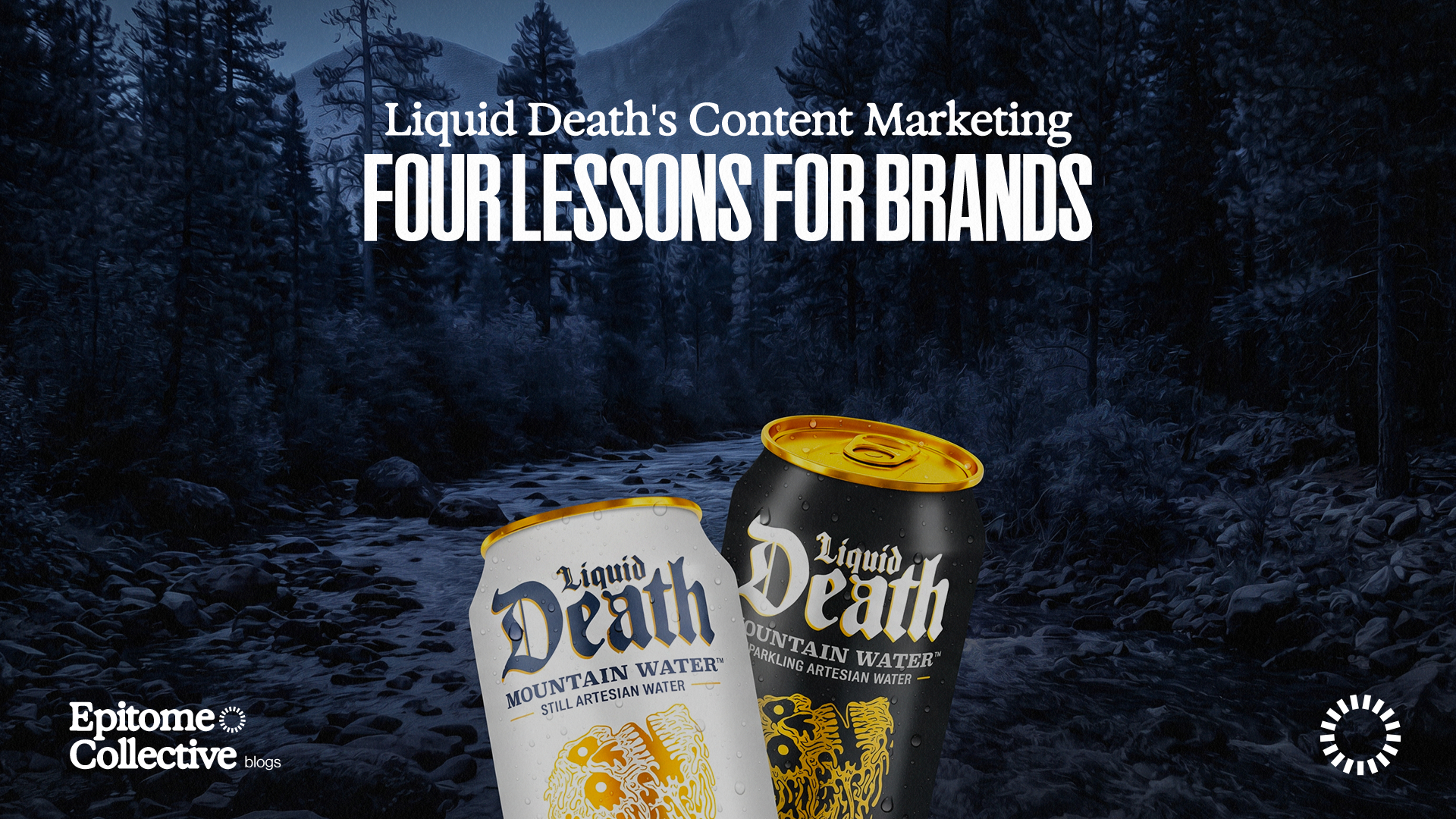
Liquid Death's content marketing works because the company runs like an entertainment studio that happens to sell drinks. It makes videos and stunts that people choose to watch and share, and that attention sells the cans.
Liquid Death is a US beverage brand that sells canned water, sparkling drinks, iced tea and energy drinks under a heavy-metal, death-themed identity. It started selling online in January 2019. By October 2026 it had about 14.7 million followers across Instagram and TikTok, and the company says only Red Bull has more among beverage brands. For most of its history, it spent very little on paid media.
This breakdown looks at the brand first, then at four lessons from its content:
- Why it treats content as entertainment
- How one brand character keeps very different content consistent
- How it makes content people remember
- The small, fast team behind it all
The post ends with a section on applying these lessons in your own category. We're Epitome Collective, a video production company in Singapore, and we've used several of these ideas on client work. If you're planning the wider picture, our video marketing strategy guide for Singapore brands covers distribution and measurement.
Who is Liquid Death, and what does the brand stand for?
Liquid Death is a Los Angeles drinks company that sells healthy drinks in aluminium cans with the attitude of beer and energy drinks. It calls itself a healthy beverage brand that uses comedy to make health and sustainability fun.
Where the idea came from
Founder Mike Cessario was an agency creative director before he started Liquid Death, with stints at VaynerMedia and Crispin Porter + Bogusky. The idea came from the Vans Warped Tour. He saw people drinking water out of Monster Energy cans. Some musicians sponsored by Monster didn't even drink the energy drink they were paid to hold.

Founder and CEO Mike Cessario getting a tattoo of a customer's face in one of the brand's own videos. Image credit: Liquid Death, "Liquid Death's CEO Gets a Tattoo of a Random Customer's Face", YouTube.
He also noticed a gap in how drinks were marketed. Loud, fun marketing belonged to beer, energy drinks and junk food, while healthy brands were expected to 'feel like spinach'.
The category it was built to break
Bottled water was sold on purity, in clear plastic, with soft blues and calm wellness imagery. Liquid Death reversed each of those conventions. It put mountain water in an opaque tallboy can, gave it heavy-metal artwork and chose a name some retailers refused to put on their shelves. The can also carries the brand's environmental line, 'Death to plastic', because aluminium is infinitely recyclable.
The can itself works as advertising. People mistake it for beer at a 10 a.m. meeting, which starts a conversation about the brand.

Bottled water's usual look, left, and Liquid Death Mountain Water's tallboy can, right. Image credits: left, photo by Thad Zajdowicz via Wikimedia Commons (CC0); right, Liquid Death.

How big it grew
- About US$3 million in revenue in 2019, its first year of sales
- 113,000 stores by 2023, from an online-only start
- A record US$333 million in retail sales in 2024
- A US$1.4 billion valuation in March 2024
The range now covers flavoured sparkling water, iced tea and energy drinks, with names like Killer Cola, Rest in Peach and Severed Lime. For more on how a brand idea becomes a story people follow, see our guide to brand storytelling for Singapore brands.

Killer Cola, Rest in Peach and Severed Lime. Image credit: Liquid Death.
The four lessons below look at how Liquid Death turns a healthy drink with heavy-metal attitude into content people watch and share.
Lesson 1: Why does Liquid Death treat its content as entertainment?
Liquid Death treats its content as entertainment because people skip anything that looks like an ad. Every post competes with comedians and creators for the same attention.
Why ads get skipped
Dan Murphy, Liquid Death's SVP of Marketing, points out that attention used to be captive in the TV ad break. On a phone, anything that smells like marketing gets flicked away almost instantly. That makes the whole feed the competition, from stand-up clips to a friend's holiday photos.
Murphy sums up the brand's response in one line: 'People don't like marketing. That's why we don't make it.' The content team's brief is to make things people would choose to watch over everything else on their screen. The bar is a good comedy sketch or a creator's best post, which is far higher than 'funny for an ad'.
Why Liquid Death chose comedy
Red Bull had already proved that a drinks brand could build its marketing around entertainment, using extreme sports. Liquid Death picked comedy because the audience is bigger. Almost everyone has a favourite comedian, while far fewer people follow dirt-bike riders.
Andy Pearson, the brand's VP of Creative, adds that laughter is involuntary. People can't fake it, which makes comedy a more reliable signal of connection than it first appears.
Comedy suits Liquid Death, but other brands can pick a different lane. Murphy says earnest or educational content can work just as well, as long as it's good enough that people would pick it out of their feed.
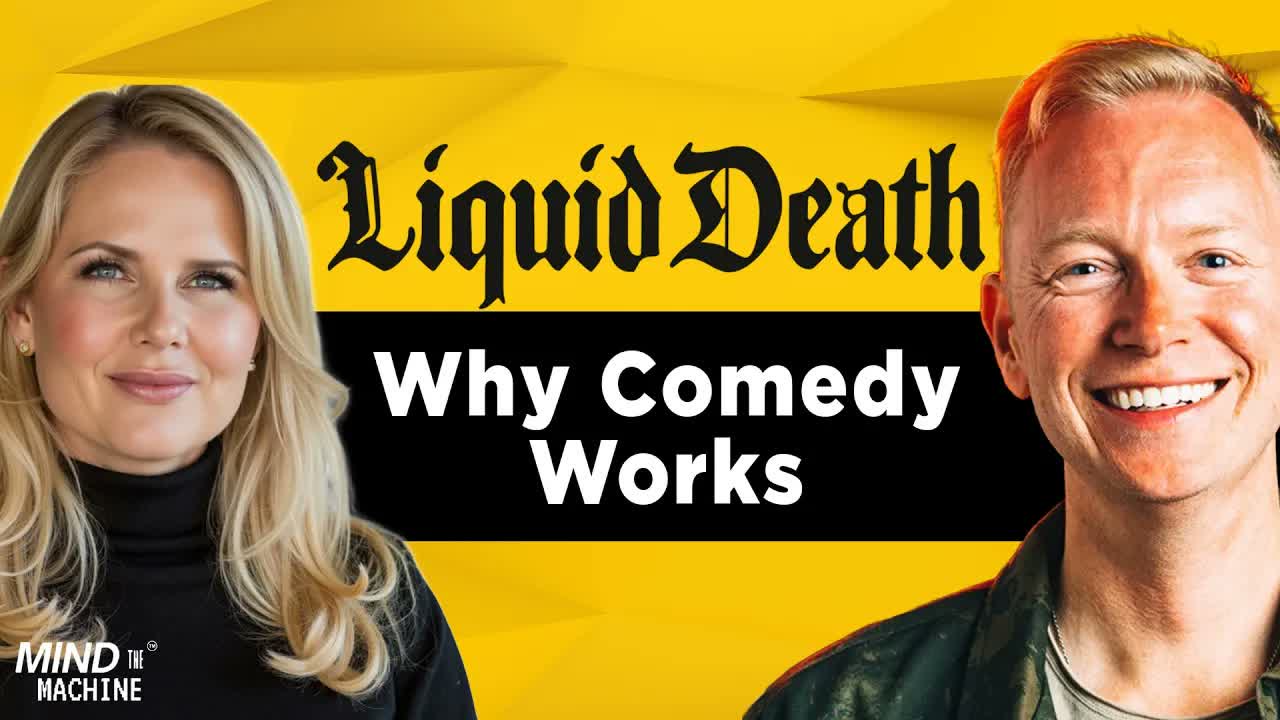
Dan Murphy, Liquid Death's SVP of Marketing, explains why the brand chose comedy on the Mind the Machine podcast. Image credit: Mind the Machine Podcast, "Liquid Death's Secret: Why Comedy Works", YouTube.
The release test
Before anything goes out, the team asks two questions: 'Did it make us laugh? Is it something we would share?' (Marketing Brew). Neither question asks whether the piece explains the product.
How we applied this for Tiger Brokers
We used comedy the same way in our 2026 World Cup ad for Tiger Brokers. It aired during World Cup commercial breaks.
The star is a football with a face that talks. It gets kicked and thrown around, and every knock mirrors a swing in the market. Then Tiger Brokers steps in, and the scene becomes a man relaxing on a beach, because investing with Tiger Brokers is easy.
The comedy has one job, which is to win attention in a break most viewers would otherwise ignore. The product message comes in the final seconds, once the audience is already watching.
Lesson 2: How does Liquid Death keep its content varied and still on-brand?
Liquid Death keeps its content on-brand by writing the brand as a character. The team checks every new idea against one question, 'What would Liquid Death do?', which lets the content take almost any form and still feel like the same brand.
The brand book that got scrapped
Pearson spent about five months writing a brand book for Liquid Death. He hated every page and threw it out. In his view, turning a joke into a written rule kills what made it interesting.
He treats the brand like a character in a TV show. Pearson's point is that nobody would watch a TV character written the way most brands are. A good character has quirks and different moods. It can surprise you and still feel true to itself.
Asking 'What would Liquid Death do?' also settles arguments. Pearson says it turns a matter of taste into a search for the answer everyone can agree on. For a content team, that means less time debating whether a post is on-brand.
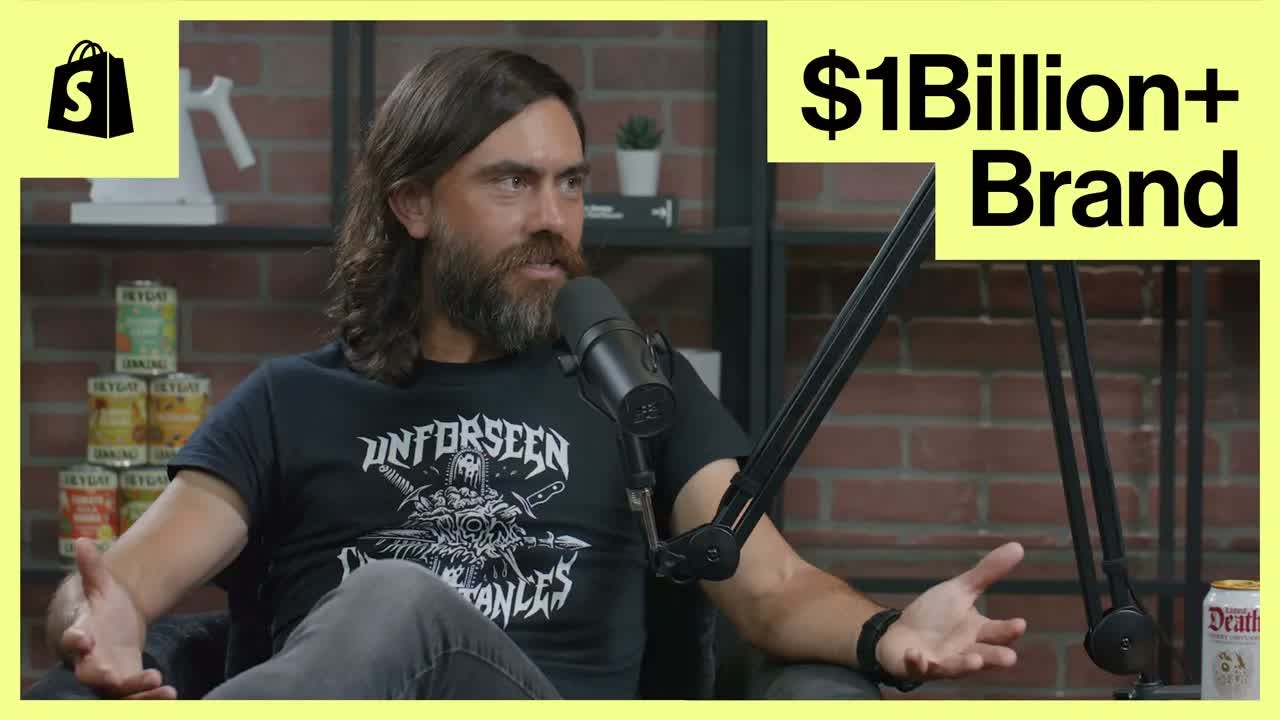
Andy Pearson, Liquid Death's VP of Creative, on the Shopify Masters podcast. Image credit: Shopify Masters, "Liquid Death's Anti-Marketing Secrets That Built A $1 Billion Brand", YouTube.
How far one character can stretch
With no rulebook, Liquid Death's ads for its own drinks have taken very different shapes:
- 'Breaking the Law' (2022, mountain water): a regional Super Bowl spot where teenagers at a house party chug tallboy cans to a cover of the Judas Priest song. It ends on a pregnant woman drinking a can, and a voiceover confirms it's just water (Campaign).
- 'Your Grandma's Energy Drink' (2023, iced tea): the iced tea launch, directed by Jackass director Jeff Tremaine. A gang of grandmothers moshes to heavy metal, fights in an MMA match and hangs out of speeding cars. Under the masks are Liquid Death staff, including CEO Mike Cessario (DesignRush).
- 'Toilet Taste Test' (2025, flavoured sparkling): people drink high-fibre prebiotic sodas while sitting on toilets, a jab at the brand's soda rivals (Muse by Clios).
- The national Super Bowl spots (2025 and 2026): a 1990s-style beer commercial and a fake medical warning, both covered in lesson 3

'Breaking the Law' (2022), left, and 'Your Grandma's Energy Drink' (2023), right. Image credits: Liquid Death on YouTube, "Breaking the Law" and "Your Grandma's Energy Drink".
Each piece is a different format, yet all of them read as Liquid Death.
The character holds together because it comes from what the writing team actually finds funny. The team includes former writers from The Onion, people who had their own Adult Swim shows, a touring punk musician and professional snowboarders. Murphy says most brands are authentic too, but authentically boring, because a committee designed them.
Lesson 3: How does Liquid Death make content people remember?
Liquid Death makes content people remember by copying ad formats everyone already knows, such as beer commercials and medical warnings, and putting its own drinks inside them. Viewers recognise the format in the first second, so the joke can land quickly.
Why familiar formats work
Pearson points out that everyone is marketed to constantly, whatever their age or taste. That makes an ad parody one of the few references every viewer shares. The format does the setup for you, which leaves the rest of the spot for the joke and the product.
Laughter then helps the spot stick, because people remember what made them laugh and pass it on.
Three parodies for its own drinks
- 'Safe for Work' (Super Bowl LIX, 2025): the brand's first national Super Bowl ad. Surgeons, football referees and bus drivers drink cans on the job to a jingle in the style of 1990s beer commercials. It's safe for work because the cans hold water and iced tea (LBB).
- 'Stop Exploding' (Super Bowl 60, 2026): a fake medical warning. Surgeon Dr Darshan Shah asks whether your head has ever exploded from an extreme energy drink, over shots of headless patients in a waiting room. He then introduces Sparkling Energy, with 100 mg of caffeine, about the same as a cup of coffee. Shah helped develop the drink (DesignRush).
- 'Liquid Death vs. Long Island' (2026): a mock workplace productivity study. One group drinks Liquid Death Iced Tea through a nine-hour workday, and the other drinks Long Island Iced Teas. The second group ends the day naked under a conference table or crying in a prison cell (Campaign).
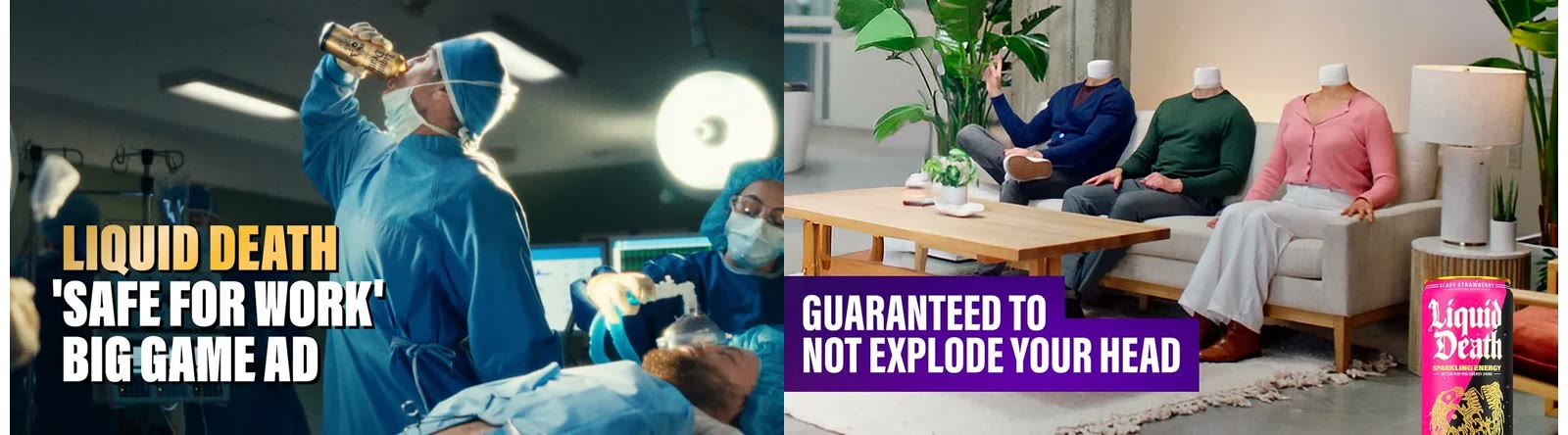
'Safe for Work' (2025), left, and 'Stop Exploding' (2026), right. Image credits: Liquid Death on YouTube, "Safe for Work" and "Stop Exploding".
All three spots were made in-house. Each one sells a specific drink, and the product sits at the centre of the joke.
How we applied this for Outer Ape
Outer Ape makes sunscreen and mosquito repellent in one product. For its Kickstarter launch, the brief was to make that benefit clear within seconds.
We borrowed the style of surreal, comedic Japanese and Thai commercials. We made three short films of 15 to 30 seconds, each set outdoors. Every film follows the same structure. Someone tries a wrong, over-the-top fix, Outer Ape arrives as the simple answer, and the product's benefit is shown on screen.
As with Liquid Death, a recognisable comic structure does the setup, so each film can spend its few seconds on the product. You can read how we planned and shot it in our Outer Ape Kickstarter case study.
Lesson 4: What does Liquid Death's content engine look like behind the scenes?
Liquid Death's content engine is a small in-house team that makes and tests its own content. A weekly writers' room produces the ideas, and Death Machine, the brand's production arm, films them at low cost.
A weekly writers' room
Murphy jokes that the core creative group could legally fit in an SUV. Each week, about 10 people meet in person in Los Angeles for a four-hour ideas session, run like the writers' room of a sketch-comedy show. A wider network of stand-up comedians gets small briefs to sharpen scripts and product names.
Ideas that don't fit the moment are banked. The team brings them back when the timing is right, such as a product launch or a cultural moment the idea can ride.
Death Machine, the in-house production arm
Death Machine has produced and directed the brand's work for more than three years (LBB). Owning everything from concept to edit lets the team improvise on set and keep the work in its own voice.
In-house production also holds costs down. According to the team, a parody spot costs about US$25,000 to US$30,000, and some have reached 5 to 7 million organic views.

'Chest Blaster' (2023), a parody fitness ad, had about 5.9 million YouTube views by October 2026. Image credit: Liquid Death, "Chest Blaster Commercial by Liquid Death", YouTube.
Small bets, measured on shares
The team posts often and reads the reaction in public, much like a comedian testing new material at an open mic. Pearson says they can usually tell how a post will perform within minutes. Cheap misses are acceptable, because the cheap hits pay for them.
The number that matters most is shares. Murphy calls shares the brand's 'god metric', and some posts get one share for every like. Content that performs organically on Instagram and TikTok then gets paid support on YouTube, TV and connected TV.
Why the ideas reach the feed at full strength
Murphy points out an imbalance in most companies. A designer would never claim they could fix the finance team's spreadsheets, yet almost everyone believes they can judge whether an ad is funny. Since most CEOs come from finance, legal or operations, bold work often dies at the top.
At Liquid Death, the final call sits with a creative. CEO Mike Cessario is a former agency creative director, and Murphy calls committee-made marketing 'truly ignorable'.
How can you apply Liquid Death's approach to your own brand?
You can start applying Liquid Death's approach with a small team. The effect builds over time. When people watch your content regularly, they come to know your brand, which builds awareness and moves them towards consideration before they're ready to buy. Here is how to put each lesson to work.
1. Make content people choose to watch
Pick one entertainment lane that suits your brand, such as comedy, education or drama. Before anything goes out, ask someone outside your company whether they'd watch it by choice and whether they'd send it to a friend. If a piece would only interest people who already care about your brand, rework it.
2. Write your brand as a character
Write a one-page bio of your brand as if it were a person. Cover what it finds funny, what annoys it, how it talks and who it would never be friends with, then add a short list of things it would never do. Use the bio in place of a rulebook, and test each new idea by asking what your brand would do.
3. Borrow a format your audience knows
Pick a format your audience grew up with, like a news bulletin, a nature documentary or a property launch ad. Study its framing, colour, on-screen type, music and voiceover, and copy them closely. Then put your product inside it and keep the message short, since the format has already done the setup.
4. Build a small, fast content engine
Hold a regular ideas session with a small group, and bank the ideas that don't fit yet. Make more, smaller pieces and judge each one mainly on shares and saves. Before each review round, name the one element of your idea that makes people nervous, and check that it survives to the final cut.
What can brands learn from Liquid Death's content marketing?
Liquid Death's content marketing shows that a brand in one of the most ordinary categories on the shelf can win attention by making content people choose to watch. The four lessons work together: entertain first, write the brand as a character, borrow formats your audience already knows and build a small team that tests ideas quickly. Our work for Tiger Brokers and Outer Ape shows the same approach working in finance and personal care. If you're planning content for your own brand, a good next step is our guide to how Singapore brands use video to tell their story.