Production House vs Freelance Videographer in Singapore
A freelance videographer is the right hire for a simple, single-camera job. A production house is the right hire once your video needs planning, a crew and a finished edit that someone other than you is responsible for.
That is the short answer to the production house vs freelance videographer question. The freelancer will almost always cost less, and that is not in dispute. The more useful question is what you get on the day, and who carries the project before and after it.
On a typical shoot with a video production company in Singapore, 10 to 17 people work on your video. With a freelancer, one person does. Neither is wrong, because they are built for different jobs.
This guide shows who is on each kind of shoot, what each one handles from pre-production to post, and how to match the choice to your project. If you are new to the process itself, start with our guide to how video production works in Singapore.
What is the difference between a production house and a freelance videographer?
The difference between a production house and a freelance videographer is headcount and responsibility. A freelance videographer is one person who plans, films and edits your video. A production house is a team that splits those jobs across specialist roles.
A freelance videographer is a self-employed camera operator who takes a project from brief to final file alone. You deal with one person, and that person chooses the shots, sets the lights, records the sound, directs whoever is on camera and edits the footage afterwards.
A production house is a company that assigns each of those tasks to a different specialist and manages them as one project. A producer runs the schedule and the budget. A director shapes the idea and the performances. A director of photography handles the camera and the look. Separate people handle lighting, set, wardrobe and the edit.
Epitome Collective, a video production company in Singapore, works this way. The video you receive is the output of several people, each doing one job, with one producer answering for all of it.
You will notice the difference most in who does the managing. A freelancer divides attention across every task at once, so anything the freelancer cannot cover, such as booking a location or chasing approvals, falls to you. A production house gives each task its own person, and the producer covers whatever is left. A crew can also add cameras, locations and shoot days to a project that would be too much for one person with one camera.
Who is on set with a production house?
A production house puts 10 to 17 people on set for a typical commercial shoot. Ten form the core crew that appears on almost every job. Art, wardrobe and makeup teams join when the script calls for them.
The core crew
On a typical Epitome Collective shoot, the core crew looks like this:
That is 10 people before a single prop is placed.

The shoot-dependent teams
Three more teams join when the video needs them:
- Art team (1 to 3 people): builds and dresses the set, and sources props.
- Wardrobe team (1 to 3 people): styles the talent and manages outfit changes.
- Makeup artist (1 person): prepares talent and handles touch-ups between takes.
The size of each team depends on the size of the shoot. A product film in a studio may need one art director, while a brand film with several scenes and a full cast may need three people in both art and wardrobe.
A crew this size exists so that each person can concentrate on one thing. In our experience, a shoot runs to time when nobody on set is doing two jobs. The gaffer is only thinking about light. The AD is only thinking about the clock. For a closer look at each position, read our guide to video production crew roles.
What can a freelance videographer handle alone?
A freelance videographer can handle any shoot where one person can reasonably run the camera, the light and the sound at the same time. That covers a lot of everyday video work.
A freelancer is a good fit for:
- Event recaps: one camera following the action, edited into a short highlight.
- Simple interviews: one person, one seat and one location, with natural or basic lighting.
- Quick social clips: fast, informal content where speed matters more than polish.
- Internal videos: updates and announcements with a small audience and a short shelf life.
For these jobs, a full crew adds people without adding value. A good freelancer will arrive, shoot and deliver with far less coordination than a team needs.
Many freelancers are skilled camera operators, so skill is rarely what limits them. Attention is. The problem starts when the shoot asks one person to do several jobs in the same minute, for example:
- Directing a nervous speaker while watching focus and audio levels.
- Relighting a room while the client waits and the schedule slips.
- Managing talent, props and a location owner with nobody else to hand them to.
When that happens, one of those jobs gets less attention than it needs, and it is usually the one that is hardest to notice on the day, such as the sound or the continuity between shots.
There is a second limit, and it sits before and after the shoot. A freelancer rarely writes the concept, scouts the location, secures permits or manages rounds of feedback as a formal process. If your project needs those, you become the producer. That works if you have the time and have run a shoot before, but it is a risk if you have not.
What does a production house handle from pre-production to post?
A production house handles every stage of a video, from the first brief to the final file. One producer owns the whole project, so the planning, the shoot and the edit stay connected.
The work runs in six steps:
- Brief and concept. The producer and director turn your goal into an idea, a script or a treatment. A clear video production brief makes this step faster.
- Pre-production. The team scouts locations, casts talent, books crew and gear, arranges permits and builds the schedule. The art and wardrobe teams source what the script needs.
- The shoot. The crew of 10 to 17 films to the plan. The AD keeps time, and the producer handles the client, the location and anything that goes wrong.
- The edit. An editor assembles the footage and shares a first cut. Your feedback comes back in agreed rounds.
- Colour, sound and graphics. A colourist grades the picture. Sound is cleaned, mixed and scored. Motion graphics and titles are added.
- Delivery. You receive the final film plus the versions you need, such as cutdowns, vertical formats and subtitled files.
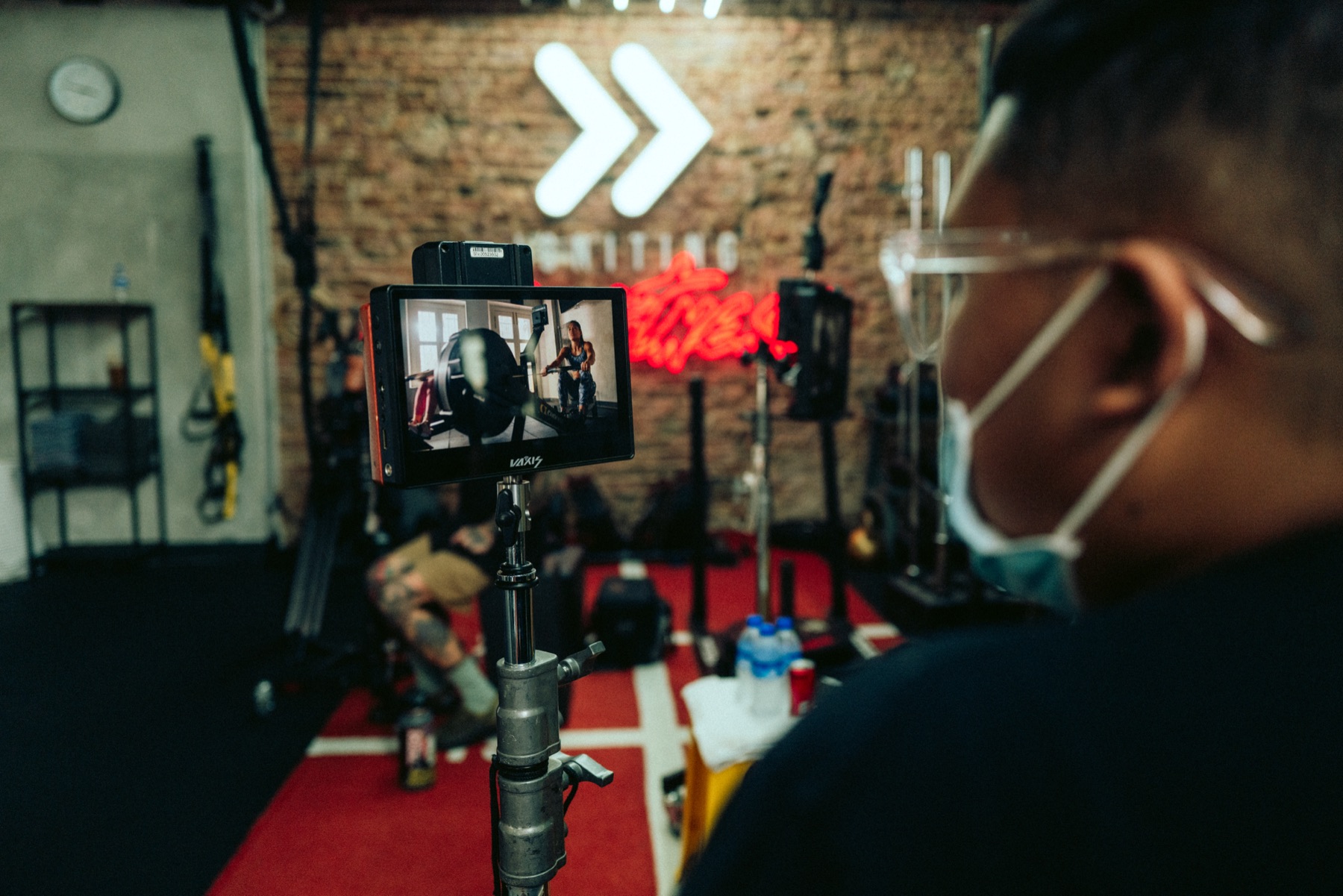
This is the finished film from the Under Armour Women shoot pictured in this guide:
Because the same team works on every step, the director who wrote the idea is in the room when it is filmed and again when it is edited. A decision made in step 1 is still being followed in step 6. A freelancer can cover steps 3 and 4 well, but steps 1, 2 and 5 are where a single person is stretched thinnest.
Post-production alone involves several specialist jobs. Our post-production guide explains what happens between the last take and the final export.

Which does your project need?
Your project needs a freelance videographer if one person can film it in one place with little planning. Your project needs a production house if it involves a concept, a cast, several setups or a result your brand will be judged on.
Use the table below as a starting point:
Five questions to ask before you decide
If your project sits between two rows, these questions settle it:
- Is there a concept to develop? If the idea still needs writing, you need a director and a producer.
- How many people appear on camera? More than two usually means you need an AD and a makeup artist.
- How many locations or setups are there? Each one adds lighting and rigging work that a single person cannot do quickly.
- Who manages the project if you are busy? With a freelancer, the answer is you.
- Where will the video be seen? A website banner forgives more than a cinema screen or a paid campaign.
If three or more of your answers point to a bigger job, the project has outgrown a single operator. At that point, look at what a full-service production team in Singapore includes before you compare names.
When you are ready to shortlist, our guide to hiring a video production company in Singapore covers briefs, budgets and what to expect. It also helps to know the common mistakes brands make when hiring a video company.
Frequently asked questions
Can one videographer shoot a corporate video?
One videographer can shoot a simple corporate video, such as a single interview in one room. A corporate video with several speakers, locations or approval rounds needs a producer and a crew, because one person cannot direct, light, record sound and manage the schedule together.
Do production houses use freelancers?
Production houses do use freelancers. Most crews in Singapore combine a core team with specialists hired per shoot, such as gaffers, grips and makeup artists. What changes is who manages those specialists. The production house selects, briefs and pays the crew, and the producer is responsible for the result.
When do I need a full crew?
You need a full crew when the shoot has a script, on-camera talent, designed lighting or more than one setup. A full crew of 10 to 17 people gives each task its own specialist, which keeps the shoot on schedule and the footage consistent from the first take to the last.
Can I start with a freelancer and move to a production house later?
You can start with a freelancer and move to a production house as your needs grow. Many brands use a freelancer for events and quick social clips, then bring in a production house for campaigns, brand films and anything that carries the brand's reputation.
Ready to plan your shoot?
If your project needs a concept, a crew and one team that stays with it from pre-production to post, that is the work we do. Tell us what you are making, and we will tell you plainly whether it needs a full production or something lighter. Talk to our video production team in Singapore.